

In the field of CNC machine tools, there are two types of equipment that dominate in milling-intensive production environments: one is the vertical machining center, and the other is the horizontal machining center. Although both are classified as CNC machining centers and designed specifically for precision machining operations including milling, drilling, tapping, and boring, their mechanical structures exhibit fundamental differences - and these differences have implications for all aspects of performance.
Main axis direction: decisive structural feature
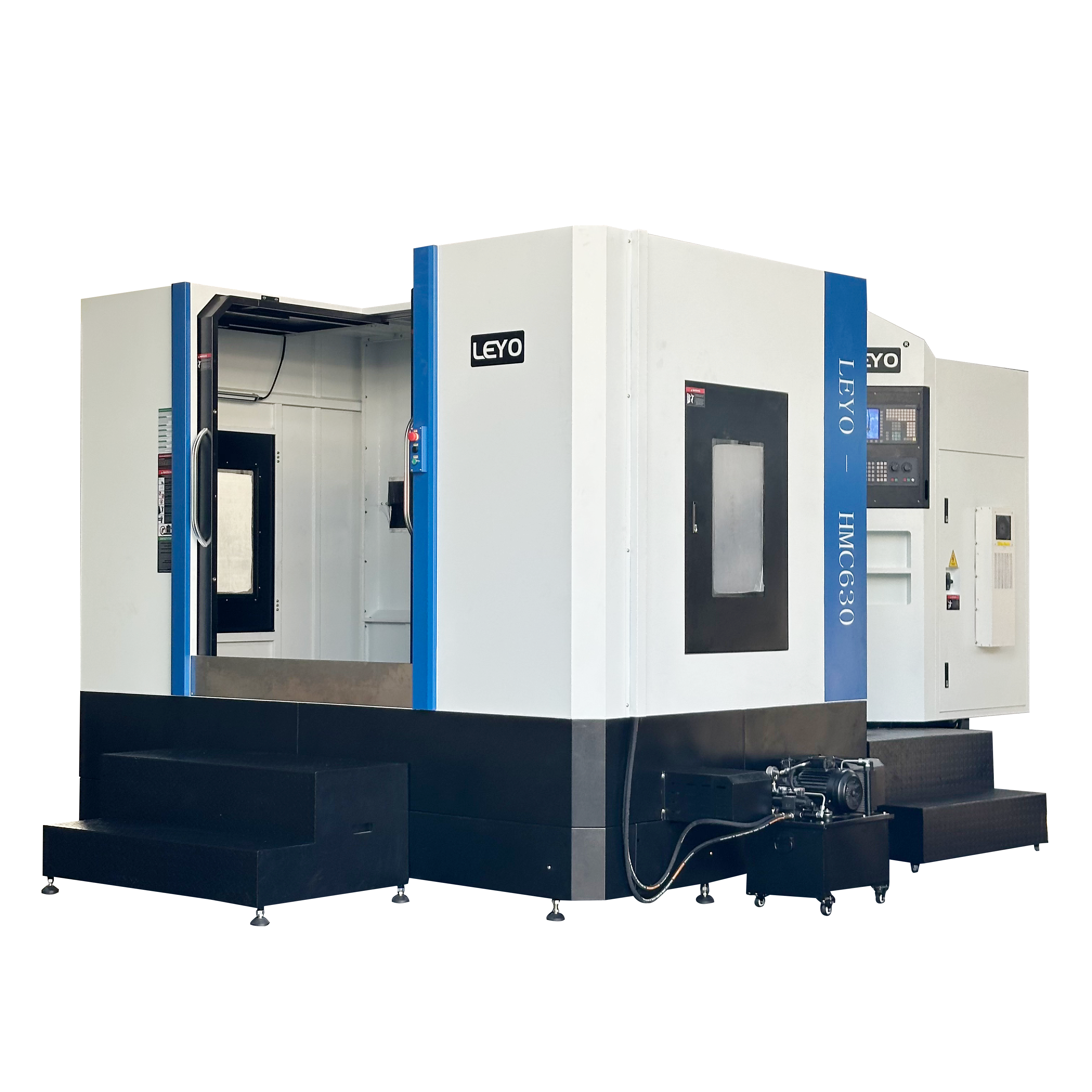
The most notable difference between a vertical machining center and a horizontal machining center lies in the orientation of the spindle. In a vertical machining center, the spindle is installed vertically, that is, perpendicular to the worktable. The cutting tool approaches the workpiece from above and moves along the Z axis, while the worktable is responsible for movements in the X and Y axes. In a horizontal machining center, the spindle is installed horizontally, that is, parallel to the ground, and the workpiece is fixed on a rotating worktable facing the spindle.
This simple geometric difference alters the entire kinematic chain of the machine. A typical three-axis vertical machining center features a fixed column and a moving table (X/Y), with the spindle head moving along the column (Z). In contrast, the standard horizontal machining center layout typically has the column moving in the X and Z directions, while the table rotates via a built-in fourth-axis rotary table. Many five-axis CNC machining centers in the horizontal machining center category add a tilting spindle or a rotating table to achieve comprehensive five-sided machining.
Frame and structural rigidity
Vertical Machining Centers (VMC) and Horizontal Machining Centers (HMC) differ in their structural requirements. VMCs typically adopt a C-frame design: the column is fixed to the bed, the headstock moves vertically, and the worktable moves in the X and Y directions. This layout is compact, cost-effective, and easy to operate. The worktable is usually equipped with a T-slot configuration for directly clamping vices, fixtures, or workpieces. High-quality VMCs use magnesium carbon cast iron beds and columns to suppress vibration and maintain geometric accuracy during long cutting cycles.
In contrast, horizontal machining centers typically adopt a T-shaped base or a box-in-box structure. The worktable sits on a horizontal pallet system equipped with an integrated rotary indexer, while the column moves along precision linear guides or box guides. Since the spindle is horizontal, the center of gravity of the machine tool is lower, and the cutting forces are directly applied to the machine bed rather than the column. This makes the cutting platform more rigid—horizontal machining centers are generally considered to have greater structural rigidity, which translates into higher metal removal rates and the ability to withstand greater cutting depths without chatter.
Axis configuration and motion control
The standard three-axis vertical machining center provides linear motion in three directions: X, Y, and Z. However, the five-axis vertical machining center adds two rotational axes - typically a tilting spindle head (A axis) plus a rotary table (C axis) or a trunnion table - enabling complex contour machining and multi-face machining in a single setup.
In the field of horizontal machining centers, a rotary table (usually a complete fourth axis with indexing accuracy in arc seconds) is already included in the standard configuration. This enables the machining of at least three sides of a workpiece in a single setup. When combined with a tilting spindle or additional rotary axes, a five-axis horizontal machining center can machine all six sides of a prismatic part without operator intervention. This multi-sided machining capability fundamentally reduces setup time, eliminates stacking tolerances between processes, and enhances the overall accuracy of the part. Horizontal machining centers are typically equipped with automatic pallet changers - a servo-driven system that can change pallets in 8 to 10 seconds - allowing loading and unloading to occur simultaneously with spindle cutting, maximizing spindle utilization.
When choosing between a vertical machining center and a horizontal machining center, it is important to first understand these basic structural differences. For prismatic parts with main features located on one or two faces, a vertical machining center offers an easy-to-use and cost-effective solution. For multi-face machining of medium to high-volume complex or heavy workpieces, a horizontal machining center provides a structural platform, chip management, and automation preparation, enabling round-the-clock production with minimal manual intervention.