

In modern precision machining, two types of machine tools constitute the backbone of most production workshops: CNC milling machines and CNC lathes (or CNC turning machines). Although both are used for cutting metal and manufacturing precision components, their working principles are quite different. Understanding these differences is crucial for equipment procurement.

Working principle: rotating tool and rotating workpiece
The fundamental difference lies in the moving object. In CNC milling machines, the cutting tool rotates at high speed, while the workpiece remains stationary. This enables the machining of flat surfaces, grooves, slots, and complex 3D contours. In contrast, CNC lathes have the workpiece rotating on its own, while the cutting tool remains stationary. This process, known as turning, is highly suitable for machining cylindrical or axisymmetric parts such as shafts, bushings, and threaded joints.
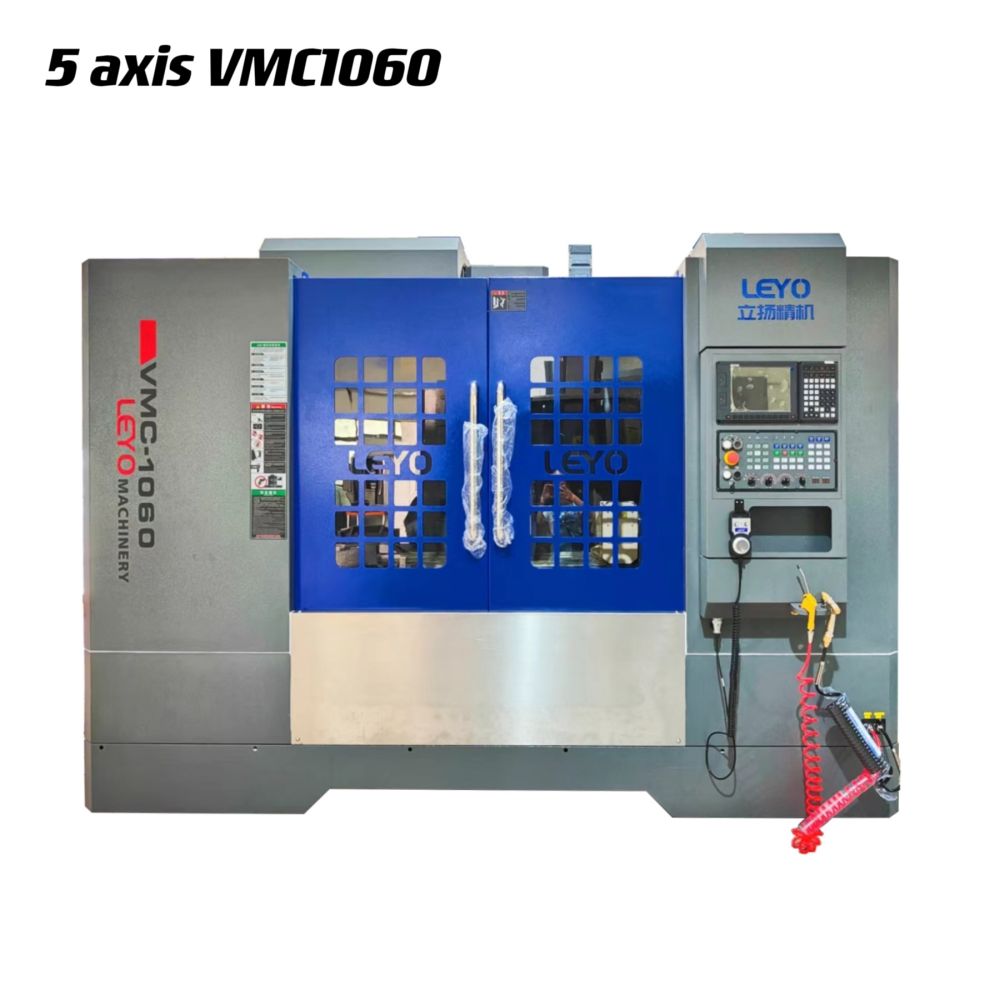
From a mechanical perspective, a typical three-axis CNC milling machine can move the tool in the X, Y, and Z directions, while a five-axis CNC machining center adds a rotating axis, allowing the tool to approach the workpiece from almost any angle. Meanwhile, a CNC turning center can be equipped with a movable tool, adding milling and drilling functions to the original lathe, thus blurring the boundaries between these two types of machine tools.
Determining factor: geometry of the part
When choosing between a CNC milling machine and a CNC lathe, it is often necessary to start with the part drawing. If the component is primarily circular - such as a hydraulic piston, gear blank, or valve stem - then turning is the best choice. If the component has flat surfaces, square grooves, and holes not on the centerline, milling is required. Of course, many components require both processes. This is where a multi-task CNC machining center or turn-milling machine can complete a component in one setup, significantly reducing cycle time and improving accuracy.
machine structure
CNC milling machines are typically equipped with vertical or horizontal spindles, worktables, and tool magazines for automatic tool change. CNC lathes, on the other hand, are centered around the spindle, chuck, and tool turret or grouped tool holder. When a lathe is equipped with a tailstock for shaft support and a sub-spindle for rear-end machining, it becomes a powerful production tool. Our factory direct product line covers all these configurations, from vertical machining centers to [slant-bed CNC lathes, designed for robust metal cutting and fine finishing.
Accuracy and surface finish
Both of these machines can meet strict tolerance requirements, but they differ in their cutting methods. Turning typically produces continuous helical cuts, achieving excellent surface finish on cylindrical parts. Milling, on the other hand, employs intermittent cuts, and its surface finish largely depends on tool engagement, step distance, and tool condition. However, high-speed CNC milling machines equipped with appropriate tools can rival or even surpass the surface finish of lathes on flat and irregular surfaces.
For a factory, possessing both CNC lathes and CNC milling machines is often the only way to meet customers' comprehensive work requirements. At Leyo, we manufacture both types of machine tools, and our engineers can assist you in determining which configuration is most suitable for your typical workpiece mix. Welcome to contact us for consultation, and visit our website to learn more about our full range of CNC machine tools.